



by Aleks Nemtcev
Your knife is the one tool that can’t be easily improvised. It carves the stakes for your shelter, prepares the tinder for your fire, and processes your food when there are no backups. In unfamiliar terrain or emergency conditions, it becomes an extension of your hands. Believing a single blade can master every chore, from processing tinder and whittling firewood to filleting a fish, is a quick route to frustration and poor decisions. Survival exposes weak assumptions fast.
Practical selection cuts through the noise. This isn’t about trends, collector appeal, or brand loyalty. It’s about how steel behaves after repeated use, how blade geometry affects control, and whether a handle actually fits your grip under stress. Good knives disappear in use. Bad ones demand constant attention. We’re talking about steel, geometry, and fit. Not logos.
Why a Knife Is Still the Core Survival Tool
In wilderness survival, your knife bridges the gap between the raw environment and basic human needs. It’s a wedge, a scraper, a precision instrument. Modern gadgets fail when batteries die or circuits fry.
A good knife just works. This absolute mechanical reliability under duress is its supreme advantage. You build everything else around this tool. Choosing wrong isn’t an annoyance. It’s a genuine liability.
Blade Basics That Actually Matter in the Field
Technical specs stop being abstract on day three of a trip. Metallurgy dictates how often you’ll be stopping to sharpen. Blade geometry determines if it splits wood efficiently or just gets stuck. The handle shape either locks into your palm or fights it. These details govern real-world safety and stamina. Ignoring them because a knife looks cool is a beginner’s move. The essential elements are brutally simple:
- Blade steel and edge retention;
- Blade thickness and durability under load;
- Blade shape for controlled cutting tasks;
- Handle ergonomics and grip security.
Field performance is the only test that counts. Soft steel turns a simple camp chore into an hours-long grind. A slick handle becomes dangerous when your hands are wet or cold. How to choose a handle
Fixed Blade vs Folding Knife in Survival Scenarios
The debate between fixed and folding blades isn’t about superiority. It’s about application. Each design answers a different set of problems under stress. Picking the wrong type for your primary scenario adds friction, maybe even danger, to an already difficult situation. You have to understand what each form sacrifices and what it guarantees.
When a Fixed Blade Makes More Sense
Choose a fixed blade when failure isn’t an option. Its one-piece construction transmits force directly from your palm to the tip, no joints, no play. Sometimes a knife must be used really hard during a survival situation. This translates to trustworthy performance during wood processing, prying, or heavy carving tasks that would destroy a folding mechanism.
For building a shelter from gathered wood or processing hard materials, this rigid reliability is everything. It’s a simple, brutal, and effective answer to demanding physical problems.
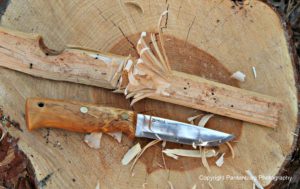
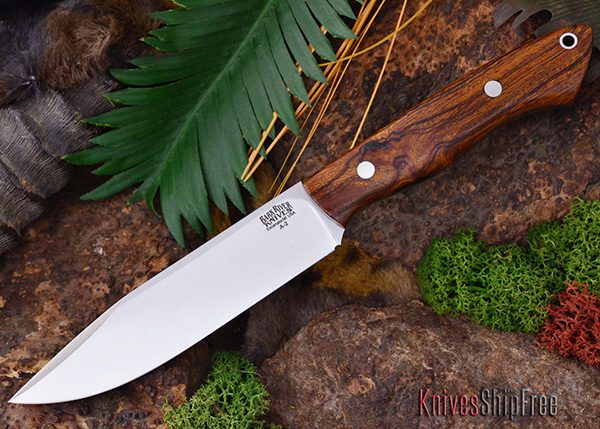
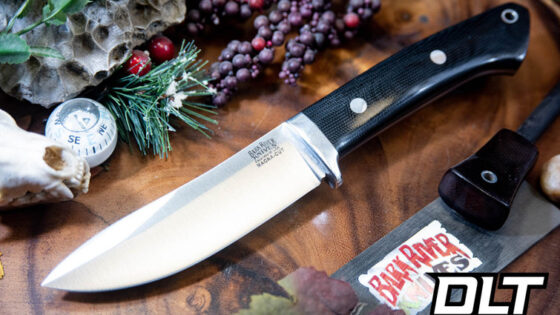
A fixed blade makes more sense for hard use work.
When a Folding Knife Is the Smarter Option
A folding knife prioritizes access and convenience. It disappears into a pocket, becoming an ever-present tool for spontaneous needs. This makes it ideal for fine cutting, food preparation, or detailed crafting work like shaping trap components. A modern folder with a solid lock is a legitimate tool, not just a backup. For the outdoorsperson, it’s the perfect partner to a larger fixed blade. For everyday urban readiness, it’s often the only blade you’ll ever actually have on you when needed.
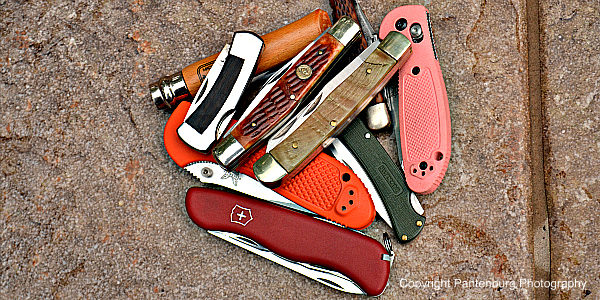
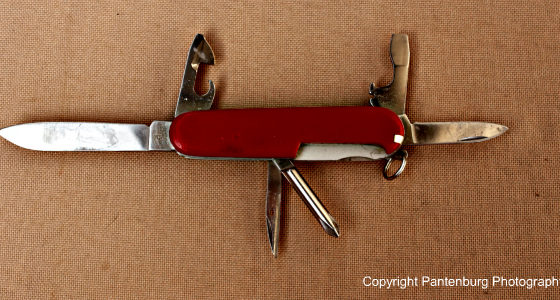
Folders come in every size, configuration and color.
One Knife or a System of Tools
The dream of one perfect universal knife is mostly marketing. It forces a single tool to compromise across too many functions. A systematic approach is smarter, spreading wear and optimizing performance. You carry dedicated tools for dedicated jobs. This layered method provides built-in redundancy, which is just another word for preparedness.
A typical, functional system looks like this:
-
- A primary fixed-blade knife for heavy tasks.
- A smaller secondary knife for fine work.
- A compact folding knife for everyday carry.
- A sharpening tool to maintain edges.
- You balance a few extra ounces against massive gains in efficiency and safety. One knife doing everything is a good story. A system of tools actually gets the work done.
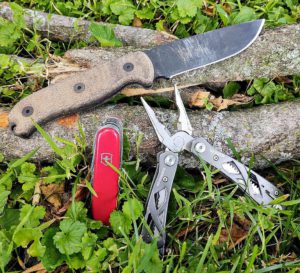
A knife system is much more efficient that a single knife that is expected to do everything well.
Why Fit and Purpose Matter More Than Mass Production
Production knives are made for a fictional average user. Your grip, your tasks, and your environment are unique. Maybe you need a pronounced finger guard for working with gloves, or a specific blade belly for skinning. Off-the-shelf gear often makes you adapt your technique to its limitations. That’s backwards thinking. The tool should conform to the task and the user. This logical pursuit of a perfect fit is where custom knives enter the discussion. It’s not about adornment. It’s about engineering an extension of your own capability, eliminating the friction of a poorly sized handle or an unsuitable blade angle. You stop fighting your gear.
Maintenance, Safety, and Long-Term Reliability
A knife is a commitment. Neglect it, and it will fail you, often at the worst moment. Dull blades are dangerous, requiring excessive force and slipping easily. Rust weakens the steel’s integrity. Caring for your tool is as fundamental as knowing how to use it. This discipline is straightforward but cannot be skipped. The routine is non-negotiable:
- Regular edge maintenance in the field;
- Proper storage to avoid corrosion or damage;
- Safe cutting techniques to prevent injuries;
- Knowing the limits of your blade.
This maintenance ritual directly translates to long-term reliability. A sharp, clean, properly stored knife can last a lifetime. It’s about the stewardship of a critical asset.
The Takeaway: Choosing Knives With Common Sense
Skip the extremes. You probably don’t need a miniature sword or a jewel-like art piece. Analyze your real, most probable scenarios. Match your steel to those needs. For most people, a sensible pairing such as a four-to-five-inch fixed blade and a three-inch locking folder covers 99 percent of realistic situations. Then practice with them. Use them on camping trips, in the backyard, processing kindling. Feel how they work.
Let that direct experience, not forum hype or flashy videos, guide your final choice. That’s the common-sense path. It’s less exciting than legend, but it works. Every single time.
Author Bio:
Aleks Nemtcev is the founder and creative director of Noblie Custom Knives, a boutique workshop crafting handcrafted blades, Damascus knives, daggers, and luxury edged tools since 2015. With deep expertise in knife design and traditional craftsmanship, he writes about blades, materials, and real-world knife use for enthusiasts and collectors alike.
Please click here to check out and subscribe to the SurvivalCommonSense.com YouTube channel – thanks!
Please subscribe to this Youtube Channel: https://www.youtube.com/user/survivalcommonsense
And to the website: https://survivalcommonsense.com/
And we would really appreciate it if you would check out my book: “Bushcraft Basics: A Common Sense Wilderness Survival Handbook.” It is available on Amazon, at Barnes and Noble and your local independent bookstore.
Get a signed copy of “Bushcraft Basics” here: https://tinyurl.com/57v5dnxy
Leave a Reply