


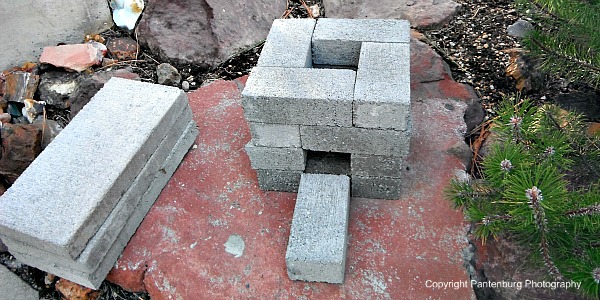
All bricks are not created equal, and given a choice, here are some of the best materials for building your rocket stove.
by Leon Pantenburg
Question from a reader/YouTube viewer: What are the best bricks to use when making a brick rocket stove? Answer: Whatever you can find quickly. But given a choice here are the best bricks:
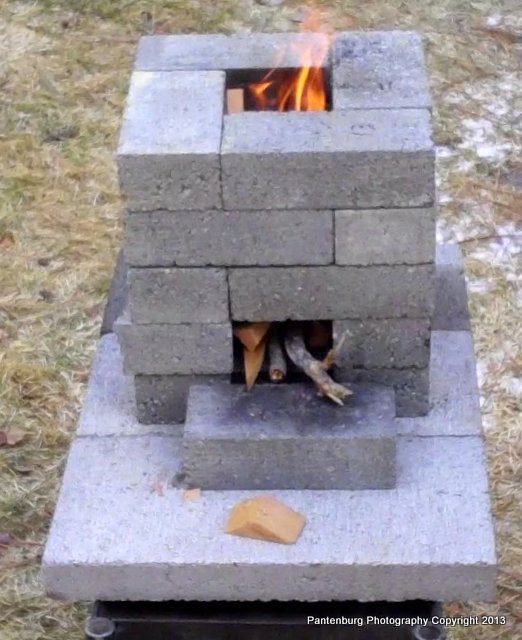
In the aftermath of a tornado, flood, earthquake or other natural disaster, a rocket stove can be a game changer. The brick rocket stoves are simple to make, very efficient, and they can be fueled with sticks, pieces of wood or a variety of organic materials. This may be just what you need to boil water and cook food.
Bricks are needed to build this stove, and there may be lots laying around. Or not. You may have to make-do with whatever is available. So look around and see what you can find. For temporary stoves, the salvaged bricks or concrete blocks don’t really matter, as long as they are the same size.
But might concrete bricks explode if they get too hot? I asked an engineer and a mason. Their answer was “no.” This myth was further busted by Survival Common Sense reader Greg Garrison:
“I spent many years in masonry construction” Garrison wrote. “Chimneys and fireplaces were our specialty. Fireplace construction uses firebrick for the firebox and ceramic flue liners to carry the heated air out of your house.
“It would take very intense heat for a concrete block to “explode.” (Think cutting torch temperatures). Over time, they (concrete bricks) will deteriorate with heat. As mentioned below, the yellow fire brick, or chimney brick, is the only brick to use. They do not absorb heat. Not sure on the cost but it would be money well-spent.
“If you are just occasionally using a rocket stove, you should be OK with regular brick/block. Also, if you are building a “permanent” rocket stove, don’t use regular brick mortar for the fire brick. You will need a small bag of “fire clay.” You mix with water just like mortar.
“I built my “rocket stove” a while back and absolutely love it. I am going to incorporate one into my new outdoor firepit/grill. I am amazed at the efficiency and the heat it produces. High heat and very little ash.”
After a disaster, the most logical and easy place to find bricks will probably be a fallen or tumbled-down chimney. Just about any bricks from it will work fine on a temporary, emergency basis. But a chimney has different sizes and types of bricks in it, and beware of mixing them up! (Information is provided by fobwp.com)
Comparison of Chimney Bricks (fobwp.com)
| Type of Brick | Material Composition | Heat Resistance | Common Applications | Cost Estimate |
|---|---|---|---|---|
| Firebricks | High alumina clay | Up to 2,600°F | Fireplace interiors, chimney linings | $3 – $10 per brick |
| Clay Bricks | Natural clay | Up to 2,000°F | Exterior chimneys, decorative work | $0.50 – $3 per brick |
| Concrete Blocks | Aggregates and cement | Up to 1,000°F | Structural bases, flue construction | $1 – $5 per block |
| Refractory Bricks | Special additives | Up to 3,100°F | Industrial furnaces, high-heat areas | $5 – $20 per brick |
| Insulating Bricks | Lightweight materials | Up to 1,800°F | Insulation in chimney systems | $2 – $8 per brick |
Clay bricks are a traditional choice for exterior chimney construction. They provide an attractive finish and excellent durability but are not ideally suitable for high-heat applications. Their aesthetic appeal makes them a popular choice for visible chimney facades. These are not the best brick choices for your rocket stove.
Fireplaces usually have fire bricks in the fire box and chimney linings, where the bricks are directly exposed to flames and long periods of heat. Look there first and use the fire bricks as your first choice for the rocket stove.
Here are some other places – if they are available – to look for bricks.
Pavers are found in patios, walkways, sidewalks and driveways. Paving stones are either actual stones, bricks, or brick-like units made of concrete. Each paver material offers a different set of characteristics, pros and cons. Their heat resistance varies with the materials.
Foundations and basement walls are usually made of concrete blocks, and prying them out is not that hard with the right tools. The blocks will work very well with the emergency biomass stove. VVVVVV
When it is all said and done, just about any bricks will work with these stove designs. Cover the stove when it is not in use – you don’t want rainwater collecting in the cracks and boiling! This water could turn to steam when the stove is fired up, and might lead to the concrete cracking. Choose a good design, and practice making the stoves. Then let’s hope you never need to build one during an emergency!
Please subscribe to this YouTube Channel: / survivalcommonsense
And to the website: https://survivalcommonsense.com/
And we would really appreciate it if you would check out my book: “Bushcraft Basics: A Common Sense Wilderness Survival Handbook.” It is available on Amazon, at Barnes and Noble and your local independent bookstore.
Get your signed copy of “Bushcraft Basics” here: https://www.paypal.com/instantcommerce/checkout/7Q7RAE5HYXSYE

Leave a Reply