Hunters have used all-terrain vehicles for years to get further into rough country to find elusive game. But, I’ve been amazed at the new technology around e-bikes that can help accomplish the same thing with a lighter footprint on the land and less expensive. It’s not something I’m personally going to test out in the near future, but I do see a place for e-bikes as an evolution of transportation options for hunters.
Why Should You Look at an E-Bike for Hunting? An electric bike can save a hunter a great deal of walking before daylight. It may make it easier to reach a stand, check distant trail cameras or carry clothing, water and optics along an established forest road.
But, that convenience can also create a false sense of security.
A hunting e-bike is still a machine. Batteries lose capacity, tires puncture, chains break, and wet ground can turn a manageable route into a difficult one. Once a rider loses easy vehicle access, a small mechanical problem with an e-bike may become a long walk, or a genuine backcountry emergency.
I advise hunters to use the bike as a transportation tool, not as a replacement for navigation skills, physical preparation, or an emergency plan.
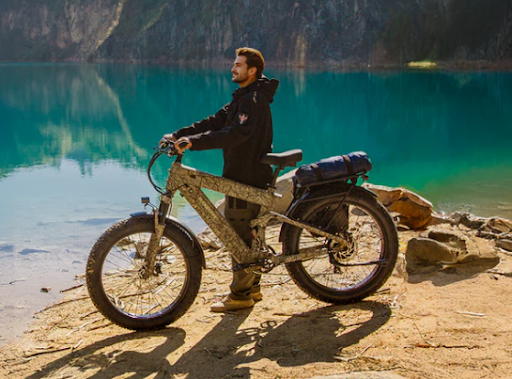
Is the Planned Route Suitable for an E-Bike?
Study the route as the first priority before comparing motors and batteries.
Electric bikes can work well on maintained forest roads, gravel access routes, packed trails and relatively firm ground. They become less predictable in deep mud, loose snow, thick vegetation, large rocks and steep technical terrain.
I’m by far not an expert in electric bike capabilities and limitations, but I did get some information from reliable sources on the subject.
A fat tire electric bike can feel more stable on gravel, packed soil, and uneven surfaces because the wider tires provide a larger contact area. They may also soften smaller bumps and make a loaded bike feel less nervous at low speeds.
Fat tires do not make every surface safe. Deep ruts can catch the front wheel, wet roots can become slippery and soft ground can increase battery consumption. Hunters should be prepared to slow down, dismount or turn back before the terrain exceeds the bike’s limits.
Access rules also matter. E-bike regulations may differ between private property, state land, national forests and designated wilderness areas. Permission to hunt does not automatically mean a motor-assisted bicycle is allowed on every road or trail.
Like any ethical hunter, check the rules for the specific route you intend to take rather than relying on general information about the wider hunting area.
How Much Battery Range Is Really Needed?
Never plan a backcountry trip around the highest advertised range.
Published range figures are generally based on particular riding conditions. Cold temperatures, steep climbs, soft ground, heavy equipment, low tire pressure, and high assistance levels can all reduce the distance available from a charge.
The return journey may also use more energy than the ride in. A hunter may be carrying additional equipment, traveling into a headwind, or crossing ground that has become wetter during the day. Darkness and fatigue can make the same trail feel more demanding.
Set a conservative turnaround point before leaving the truck. Do not wait until the battery is nearly depleted before beginning the return trip.
A long range electric bike or dual-battery model can create a larger safety margin, but extra capacity should not become an excuse to ride farther into remote countries without a backup plan.
According to the manufacturer, the Puckipuppy Bulldog Pro, for example, uses two removable 48V 15Ah batteries and has a stated range of 80 to 130 miles. It pairs a 750W motor with up to 1,350W of peak output, 26-by-4-inch fat tires, full suspension, hydraulic disc brakes and a 400-pound maximum load rating. Those features can support long rides on established forest tracks and gravel roads, but the bike also weighs 94.1 pounds before equipment is added. Its dual batteries may provide valuable route flexibility, yet that weight could make the bike difficult to pedal, push or recover if it loses power or becomes damaged far from the truck.
Monitor battery use throughout the ride. When power consumption is higher than expected, shorten the route while there is still enough daylight and battery capacity to return safely.
What Happens When the Battery Runs Out?
Most e-bikes can still be pedalled without motor assistance, but a heavy hunting model will not feel like an ordinary bicycle.
The motor, battery, wide tires, suspension, racks and reinforced frame all add weight. Add cold-weather clothing, a backpack, and other hunting equipment, and climbing without electrical assistance may become exhausting.
Pushing the bike can be just as difficult. A fallen tree, narrow trail,or steep side slope may turn a heavy e-bike into an obstacle rather than an advantage.
Before taking the bike into a remote country, ride it with the motor switched off. Test it on level ground and a gentle hill while carrying the equipment planned for the hunt. This provides a realistic idea of what an empty battery could mean several miles from the vehicle.
The emergency plan should not depend on being able to pedal the bike home. Hunters still need navigation, communication, and survival equipment suitable for an unexpected night outside.
What Equipment Should Be Carried?
An e-bike does not replace the normal contents of a hunting daypack.
Carry water, weather-appropriate clothing, a headlamp, fire-starting equipment, first-aid supplies and reliable navigation tools. Cell service may disappear in remote areas, making a satellite messenger or personal locator beacon worth considering.
Always tell a partner where you’re going. A responsible hunter should know the plans for parking, which route will be used, and when they expect to check-in with their trusted partner. A map shared with them before the trip is more useful than a vague statement about hunting somewhere in a large forest.
The bike also needs its own repair equipment. A practical field kit may include:
- A pump suitable for the tires
- Tire plugs or patches
- A spare tube when field replacement is possible
- A compact multi-tool
- Basic chain-repair supplies
- Zip ties and strong tape
- A small rag and work gloves
Know how to use each item before the trip. The middle of a cold, wet evening is not the ideal time to learn how a tire plug works.
A damaged electrical component may not be repairable in the field, but many common mechanical problems can be managed when the rider has the correct tools and basic experience.
How Should Hunting Gear Be Loaded?
The maximum load rating includes more than the equipment attached to the rear rack.
It normally includes the rider, clothing, batteries, accessories, bags and all other cargo. Calculate the combined weight before adding racks, baskets, or trailers.
Weight distribution is equally important. A heavy load positioned too far behind the rear wheel can affect steering and increase stopping distance. Loose straps can enter the spokes, chain, or brake rotor.
Keep frequently needed items accessible without allowing them to move. Heavier gear should sit low and close to the center of the bike whenever possible.
A hunting e-bike may help carry a pack, clothing, optics or compact equipment along suitable access routes. A standard rack should not automatically be treated as a game-hauling system. Large or awkward loads may require a compatible trailer designed for the bike and terrain.
Practice with the intended load before hunting season. Start, turn, climb, and brake on ground similar to the planned route. The way an unloaded bike handles in a driveway says little about how it will respond with a full pack attached.
Why Do Brakes and Suspension Matter?
An electric hunting bike may need to control a substantial combined load on loose or sloping ground.
Hydraulic disc brakes can provide strong, predictable stopping with relatively light pressure at the lever. They still need regular inspection. Brake pads that seem adequate during a short neighbourhood ride may respond differently during a loaded descent.
Before every trip, check that the levers feel firm and that the rotors are clean. Inspect the tires, wheels and axles at the same time.
Suspension can reduce the impact of roots, stones, and washboard roads. Full suspension may improve comfort and help both wheels remain controlled over irregular terrain.
It cannot compensate for excessive speed. The safest pace on a forest road is often far below the bike’s assisted maximum. Hunters need enough time to see holes, branches, animals, and changing ground conditions.
Speed should preserve control, not test the bike’s limits.
How Do Cold Weather and Water Affect the Bike?
Cold temperatures can reduce battery performance. A battery that provides adequate range on a mild afternoon may discharge more quickly during an early-season morning below freezing.
Store removable batteries indoors before the trip when the manufacturer permits it, then install them shortly before departure. Do not attempt to charge a battery when it is extremely cold, damaged, or wet.
Water resistance should not be confused with waterproofing. Rain, puddles, and wet vegetation may be manageable within the manufacturer’s stated limits, but deep water crossings and submersion can damage electrical components.
After a wet ride, clean and dry the bike according to the manufacturer’s instructions. Inspect the chain, connectors, battery compartment ,and brakes before storage.
Mud and moisture that remain on the bike may cause problems long after the hunt is over.
What Should Be Checked Before Leaving the Truck?
A short inspection can prevent a minor issue from becoming a backcountry problem.
Confirm that the batteries are charged, correctly installed and locked in place. Check tire pressure and look for cuts, embedded objects, or sidewall damage. Test both brakes and inspect the chain, wheels, and visible cables.
Make sure every bag, rack and strap is secure. Verify the route, weather forecast and turnaround point. Test the lights even when the plan is to return before dark.
The bike should also be tested while fully loaded before the first serious trip of the season. Learn how quickly it uses battery power on hills and how much stopping distance it requires on gravel.
Problems discovered close to home are inconvenient. The same problems several miles into the backcountry can become dangerous.
Use the Bike to Support the Hunt
A hunting e-bike can reduce the effort required to reach a stand, scout a large property, or move personal equipment along an approved access road. It may be especially useful for older hunters or anyone trying to conserve energy for the rest of the day.
The bike should never encourage a hunter to travel farther than their skills, equipment, and physical condition can support.
Choose routes conservatively. Carry the tools needed to deal with common problems, and maintain enough battery reserve to return under worse conditions than those encountered on the ride in.
A capable bike can improve backcountry access, but the most important equipment is still good judgement. Check the route, prepare for mechanical failure, and pack for the possibility that the ride home may not go according to plan.
Most of all, have fun, stay safe, and produce a successful harvest.