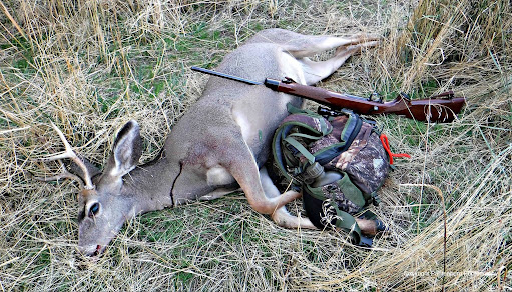
My first hunting rifle was a budget hunting rifle, not what you might call top-of-the-line. I picked up a used Winchester model 670 30.06 with a four-power Weaver scope. It cost $150 and that was a lot for me – I was in VISTA (Volunteers In Service to America) on the Omaha Indian reservation in Macy, Nebraska, and was paid $50 a week. I had to do a lot of saving to buy the rifle.
Regardless, that rifle killed a lot of deer and was a tackdriver until I sold it several years later for $175. I have regretted the sale ever since! With a lot of budget rifles on the market, it’s important to really look at what you get for your money.
Here’s the good news: the cheap rifles of today are more accurate than the premium rifles of a generation ago. Modern CNC manufacturing means a $400 bolt gun can shoot groups that would have embarrassed rifles costing three times as much in the 1990s.
The bad news: the budget category still has landmines. Some sub-$600 rifles are genuine bargains that will serve you for decades. Others have rough actions, heavy triggers, or quality control that treats accuracy as a roll of the dice.
This guide below covers the best budget hunting rifles you can buy new, and ones you might want to think twice about. This article covers the strategy of buying a used rifle versus a higher tier one for the same money.
A note on prices: all figures below reflect typical street prices as of mid-2026. The firearms market moves constantly, so treat every number here as a snapshot, not a guarantee of price point.
What to Expect from a Budget Hunting Rifle
Let’s set expectations honestly. At the sub-$600 price point, manufacturers save money somewhere. Usually it’s the stock (flexible plastic instead of rigid composite), the trigger (functional but not crisp), the finish (basic bluing instead of Cerakote or stainless), and the overall fit and polish.
What you should NOT compromise on, in my opinion, is accuracy and reliability. A good budget rifle will still shoot 1-1.5 MOA with ammunition it likes. That’s more than enough precision for shots on deer-sized game at any reasonable hunting distance. It must feed, fire, and eject every time. Several rifles in this price class deliver exactly that.
What you’re giving up is refinement, not capability. The deer can’t tell the difference between a $400 rifle and a $2,000 one. Only you can.

Best Budget Hunting Rifles You Can Buy New
CVA Cascade
The Cascade earns its spot at the top of the budget conversation for a simple reason: CVA and Bergara are sister companies under the same parent.
Cascade barrels come out of Bergara’s factory in Spain, from the same operation behind some of the most respected production barrels in the industry. You’re effectively getting a more expensive rifle’s barrel at a budget price.
The stock is more rigid than most in this class and the trigger is a standout (adjustable, crisp, typically around 3 pounds from the factory). American Rifleman’s testing produced groups under an inch with some loads with this thing.
CVA is confident enough to back every Cascade with an accuracy guarantee too. You get 14 days from purchase to verify MOA groups, and if the rifle can’t do it, they’ll replace it or refund you. No other maker in this bracket puts it in writing that plainly.
The Cerakote version adds meaningful weather durability for hunting in rough conditions, if you’re willing to stretch your budget about $100 past the base blued-steel model.
Typical price: $450 to $650 depending on configuration
Ruger American Gen 2
Ruger’s 2024 update to the American line raised the bar for a budget rifle. They put Cerakote on critical components, a spiral-fluted and threaded barrel, a three-position tang safety, and an adjustable stock with a far better feel than the original’s.
On paper and in hand, it looks like a rifle that got the wrong price tag. There are two caveats for this, though.
First, the Marksman trigger, while adjustable, ships heavier than ideal. It’s around 4 to 4.5 pounds from the factory, and it only adjusts down to about 3 pounds, with some creep before the break.
Second, feeding consistency varies: some rifles run flawlessly, while others need firm magazine seating or a break-in period before the action smooths out under a loaded magazine.
Neither is a dealbreaker at this price, but run a couple boxes of your hunting ammunition through it before the season starts. It’s good practice with any new rifle anyway.
Typical price: $500 to $600
Savage Axis II
The Axis II is the classic entry-level workhorse. Its headline feature is the AccuTrigger, Savage’s user-adjustable trigger that remains genuinely better than what most competitors put in rifles at this price.
Accuracy is a consistent strength, unsurprisingly. Many Axis II users report sub-MOA groups with ammunition the rifle likes. Savage’s barrel-nut headspacing system also deserves some credit for that consistency.
The compromises are cosmetic and tactile. The stock feels like what it is (inexpensive polymer), the bluing is basic, and if you buy the XP package version, plan to upgrade the bundled scope eventually. But as a pure hunting tool, it does the job for less money than almost anything else worth owning.
Typical price: $300 to $450, often less on sale
Weatherby Vanguard (When on Sale)
The Vanguard usually sits slightly above this price bracket, but it regularly dips into this budget category during sales and clearance events. When it does, it’s arguably the best value on this list. So watch for those promotions.
Built on the proven Howa 1500 action, the Vanguard carries a factory sub-MOA guarantee (with Weatherby or premium factory ammunition) and a stock so rigid it feels overbuilt for the price.
If you find one under $600, don’t overthink it. And keep the Vanguard in mind for the used section below. It comes up again.
Typical price: $550 to $650 new, occasionally less
Think Twice Before Buying
Not everything in the budget aisle deserves your money… at least know what you’re gambling on. The rule is to buy only what is known for consistency in quality.
Let’s start with the Mossberg Patriot as an example. Its big problem is consistency between rifles rather than any single flaw. Some test samples shoot sub-MOA, but others have been documented shooting groups several times that size. That’s a problem for me.
In one widely publicized case, a reviewer’s Patriot couldn’t be fixed even after Mossberg replaced the barrel and sent a representative to the range to diagnose it. You might get a great one. You might not. At this price point, other makers give you better odds. Hard pass.
The Remington 783 is almost the opposite case: accuracy was never the problem. Even its harshest reviewers concede the 783 shoots well.
What earned it a not-great reputation under Remington’s previous ownership was everything around the barrel. The stock feels like cheap plastic, the bundled scope’s eye relief is so short it’s a pain behind magnum calibers, and its fit and finish are for the bargain bin.
RemArms has since restarted production, and reviews of the new rifles are warmer. If you find an old-stock 783, it can be a fine shooter with a stock swap. But at that point you’re buying a project instead of a rifle, and a Savage Axis II does it right out of the box.
The Smartest Budget Move for Hunting Rifles: Buying Used
Here’s the strategy most budget rifle reviews never mention: for the price of a new budget rifle, the used market puts genuinely higher-tier hardware within reach.
Consider what’s routinely trading hands as of mid-2026, like these:
- Post-1964 Winchester Model 70s – push-feed hunting rifles from “The Rifleman’s Rifle” lineage. They average in the $300-600 range used in common configurations, well under half what a new Model 70 costs.
- Browning A-Bolts – Japanese-built rifles with famously smooth actions, averaging around $500 used.
- Howa 1500s – the same action Weatherby builds the Vanguard on, averaging under $500 used.
- Vanguard – They average around $500, and that’s the same rifle from the “buy new” list above, for $100-150 less than sale price.
Every one of those rifles was built to a higher standard that the sub-$600 new market simply doesn’t reach. They have better actions, better wood or composite, and better fit.
And rifles are durable goods. A bolt gun that’s been hunted a few seasons and maintained reasonably has decades of service left in it.
Buying used online is easier to do well than most first-timers expect, because listings put more information in front of you than a glance across a gun counter ever did. I would favor listings that include clear photos of the muzzle crown and down the bore, an honest condition description, and a stated round count if the seller knows it.
And ask questions before bidding! A seller who answers specifics about the chamber and crown is a seller you can trust. And check the platform’s inspection policy: reputable auction sites give you a window after transfer to examine the rifle before the sale is final.
FirearmLand’s rifle auctions are a good place to see what this strategy looks like in practice. The used inventory includes no-reserve and penny-start auctions where final prices frequently land below what a new budget rifle costs. Between online auctions, local shops, and gun shows, patient buyers can land a genuinely better rifle for budget money.
Which Caliber of Rifle Should You Choose on a Budget?
Caliber choice matters more when money is tight, because ammunition is a recurring cost that dwarfs the rifle’s price over years of ownership.
Stick to the high-volume standards: .308 Winchester, .30-06 Springfield, .243 Winchester, 6.5 Creedmoor, and 7mm-08. All of them take deer-sized game cleanly, are available in every sporting goods store in America, and have budget-friendly practice ammunition. The .243 and 6.5 Creedmoor are the softest-recoiling of the group, which makes practice more pleasant and flinching less likely (worth considering for newer shooters).
Avoid niche and boutique chamberings on a budget build. A rifle in an uncommon caliber might be cheap to buy precisely because ammunition is expensive and hard to find.
Saving $50 on the rifle and paying $15 more per box of ammo is a losing trade within the first year. This applies double on the used market, where an odd chambering is often the reason a nice rifle is priced low.
Budget Rifle Buying Tips
Put your savings into glass. A $400 rifle with a $300 scope will outperform a $650 rifle with a $50 scope in real hunting conditions, especially in the low light of dawn and dusk when game moves. The scope is not the place to economize.
Package deals are a mixed bag. Rifle-and-scope combos save money upfront, but the bundled scopes are usually the weakest link. They’ll work for a season, but plan to upgrade.
Shop the calendar. Budget rifles get significant markdowns after hunting season ends. Last year’s camo pattern shoots exactly the same as this year’s.
Factor in the total cost. Rifle, scope, rings, sling, and a few boxes of ammunition. Build the whole budget before you buy the rifle, not after you get home with your new rifle and plenty of ambition.
And There’s This
The budget hunting rifle market rewards informed buyers. A CVA Cascade, Ruger American Gen 2, or Savage Axis II bought new will hunt reliably for decades. A used Winchester Model 70, Browning A-Bolt, or Howa 1500, and bought smart, might do the job with more sass for the same money.
Either way, the animal at the other end will never know what your rifle cost.
Pro Tip: Buy the accuracy and reliability, skip the frills, spend the difference on good glass and practice ammunition, and go hunting.