


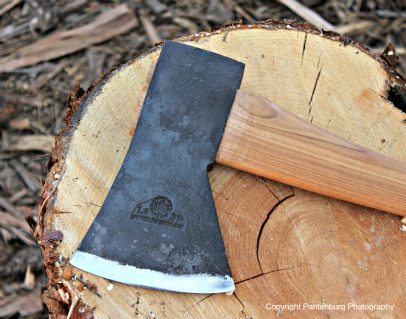
An axe should be a valuable part of your long-term preparedness gear.
But what is the best size? This Hults Bruk Dvardala may hit that sweet spot for you.
by Leon Pantenburg
Disclaimer: Hults Bruk supplied the product for this review. I don’t work for the company and was not paid to field test and review this product. This is strictly my opinion, and nobody had any input into the contents.
All of us preparedness/survival types
look for Goldilocks-sized gear – not too big, not too small, but something that is just right. A “Too big” axe will probably be left in the vehicle at the trailhead. The “Too small” one may not be up to the job. “Just right” gets taken along and used. (Read axe or saw)
So it goes with axes. For many of us, the Dvardala hunting and forest axe may be just right. Here is how it handles.
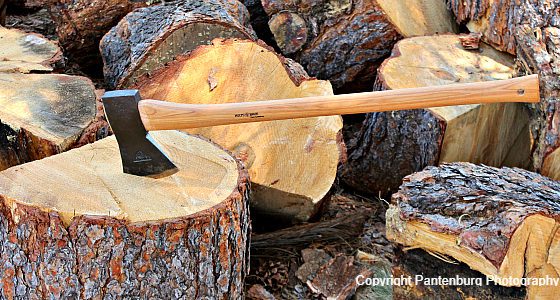
Dvardala, (renamed from SPIKA around January 1, 2026) could be a perfect all-purpose axe. It has the same type of head as the Hults Bruk Akka forester’s axe, but the handle is shorter – 17.5 inches long – making the axe more portable.
I like Hults Bruk products.
My Hults Bruk Felling axe came in really handy when a big branch fell off an oak tree in my backyard.
The Dvardala axe head is hand-forged at the historic Hults Bruk, a forge that has been in operation since 1697 – blackened, hand-finished, razor-sharp with a polished edge.
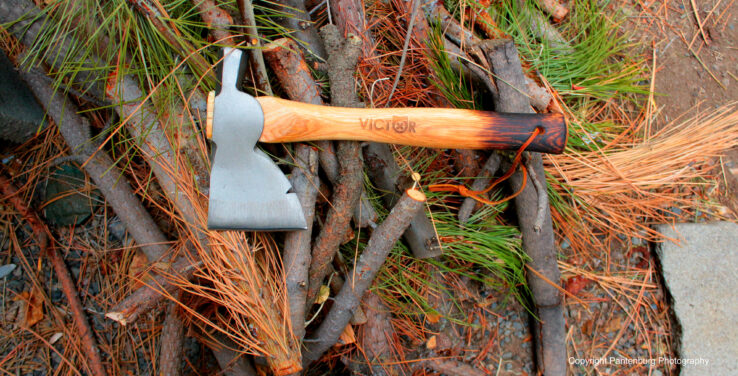
Each axe head is made from high-quality Swedish axe steel, Hults Bruk claims, expertly tempered to hold a very sharp edge even after repeated sharpening. The curved handle is made from American hickory, sanded and protected with linseed oil and engraved with the HB logo. The axe is a good size for precision work such as carving, whittling, or building fire stands or shelters around a camp site.
The semi-straight edge with a flat and wide grind allows the axe to rest firmly against the work piece. With its slightly curved edge the axe can be used for light forestry work such as clearing a path or trail-maintenance. The head is slightly thicker over the cheeks, giving it good splitting capabilities for chopping firewood. The axe also features a curved narrow handle with a pronounced end knob for a more secure grip.
Specs
Dimensions: 17.5 inches long by 0.95 inches wide
Handle Material: Hickory wood, treated with linseed oil for protection
Head Type: Forest, hand forged
Steel: Swedish axe steel, tempered to hold a very sharp edge even after repeated sharpening.
Weight: 1.5 pounds
Sheath: Comes with a premium leather sheath, shipped with a storage box and detailed user’s manual.
It has the same type of head as the Hults Bruk Akka forester’s axe, but the handle is shorter – 17.5 inches long – making the axe more portable. The shorter handle also allows for working with the axe closer to your body. The axe head is hand forged at the historic Hults Bruk, a forge that has been in operation since 1697 – blackened, hand-finished, razor-sharp with a polished edge.
This Goldilocks axe is going to get a lot of use from me. It will get used hard in the fall when I’m updating deer stands and cutting shooting lanes around them. It will get taken on camping trips and to Bluegrass festivals, because it is a handy size, and who knows what firewood will have to be split? And, God forbid, it could be called into service as a weapon.
The Dvardala is perfectly sized for campsite tasks like:
- Building shelters and fire stands – Precise carving and whittling work
- Chopping firewood – Good splitting capabilities for camp cooking
- Trail maintenance – Lightweight enough for light forestry work
- Portability – The shorter handle makes it easy to pack in your camping gear
The shorter handle also allows for working with the axe closer to your body.
Order a Hults Bruk axe or hatchet here.
But isn’t an axe or hatchet dangerous?
Yes! It can be. I am very lukewarm about including a hatchet or axe in any survival gear that may end up being used by a beginner. Axes cut by velocity, and to the untrained user, either a full-size axe or hatchet could be very dangerous. Axes and hatchets can bounce, slide or ricochet off wood at odd angles and then an accident is possible.
In many cases, a saw is the best choice for wood processing. But in other instances, an axe is the best tool for the job. This one may be what you’ve been looking for.
Please click here to check out and subscribe to the SurvivalCommonSense.com YouTube channel – thanks!
Leave a Reply