
Every serious angler knows that a quiet approach and steady thrust on the water can decide the outcome of a fishing trip. What sits behind that quiet approach is rarely the motor itself, but the power source feeding it.
A dependable trolling motor battery keeps your electric motor humming from sunrise casts to twilight strikes, without the sudden voltage drops that spook fish, or leave you paddling back. Survival preparedness includes having all the right equipment to ensure you return to shore safely.
Yet many boat owners still treat the battery as an afterthought, buying whatever fits the tray and hoping it lasts the season. The result is short runtimes, mid-lake failures, and premature replacements that cost more than a careful purchase ever would.
This guide below walks through the practical decisions behind selecting a battery that matches how you actually fish, from short weekend outings on small lakes to full tournament days across open water. You will learn what matters, what to ignore, and how to read the specifications that manufacturers list.
Understanding What Your Trolling Motor Actually Demands
Before comparing brands or chemistries, take a clear look at what your motor pulls from the battery. Most freshwater trolling motors run on twelve, twenty-four, or thirty-six volt systems, and each configuration draws current differently under load.
A twelve-volt setup on a small aluminum boat may only pull twenty to thirty amps at full throttle, while a thirty-six-volt bow-mount motor on a bass boat can push past ninety amps when fighting wind and current. The right trolling motor battery for your rig depends first on this current draw, not on price or marketing claims.
Check the maximum amp rating printed on the motor housing or in the owner manual, then match it to a battery that can sustain that draw for the duration you fish.
Amp Hours and Real Runtime
Amp-hour ratings tell you how much energy a battery stores, but the number on the label rarely reflects the runtime you will see on the water. A one-hundred amp-hour battery does not always deliver one hundred amps for one hour or ten amps for ten hours.
Lead-acid chemistries lose capacity quickly under heavy loads, a behavior described by Peukert’s law, while lithium iron phosphate cells hold much closer to their rated capacity even at higher discharge rates. If you fish six to eight hours per outing and your motor averages twenty amps at cruising speed, you need roughly one hundred sixty usable amp hours in reserve to avoid deep-cycling the battery to failure.
Weight, Space, and Boat Balance
Batteries are heavy, and where you place them changes how your boat handles. A pair of flooded lead-acid twelve-volt units can add over one hundred twenty pounds to the bow, altering plane behavior and fuel efficiency on gas-powered rigs.
Lithium alternatives cut that weight by roughly two-thirds, which lets tournament anglers carry more spare tackle or a second passenger without exceeding the hull’s rated capacity. Measure the battery tray before shopping, because dimensions vary between group sizes, and a battery that fits the amp-hour requirement but not the physical space becomes a frustrating return.
Comparing Battery Chemistries for Marine Use
Three chemistries dominate the trolling motor market today, and each carries clear trade-offs. Flooded lead-acid batteries are the least expensive up front and remain popular for casual anglers who fish a few weekends per year. They tolerate rough handling and are easy to find at any marine supply store, but they require regular water top-offs, vent hydrogen gas, and lose usable capacity if discharged below fifty percent state of charge repeatedly.
Absorbed Glass Mat and Gel Options
AGM and gel batteries sit in the middle tier. They are sealed, spill-proof, and vibration-resistant, which suits the pounding of a bass boat crossing choppy water. They also self-discharge slowly, so you can leave one on a shelf for weeks without losing much charge. The downside is cost, roughly double a flooded equivalent, and a still-limited depth of discharge that reduces effective capacity compared to lithium.
Lithium Iron Phosphate for Serious Anglers
Lithium iron phosphate, often written as LiFePO4, has become the choice for anglers who fish more than a dozen days per season or who compete in tournaments. These batteries can be discharged to nearly zero without damage, weigh a fraction of lead-acid units, and deliver consistent voltage until they are almost empty.
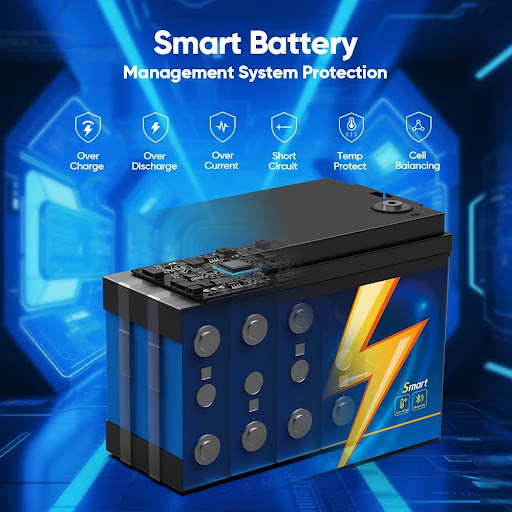
The upfront price is higher, but the cycle life of two thousand to five thousand cycles means most owners will replace their boat before they replace the battery. Brands such as Vipboss have made LiFePO4 units more accessible to recreational anglers by offering marine-rated models with built-in battery management systems that protect against over-discharge, over-charge, and short circuits.
Matching Battery Configuration to Motor Voltage
Thrust ratings and voltage go hand in hand. A twelve-volt motor uses a single battery, a twenty-four-volt system needs two batteries wired in series, and a thirty-six-volt setup requires three. When wiring in series, every battery in the string should be identical in age, chemistry, and capacity, because the weakest unit sets the ceiling for the whole bank.
Mixing an older lead-acid battery with a newer one, or combining chemistries, causes uneven charging and shortened life across all units. If you upgrade to a higher-voltage motor, replace the entire bank at once rather than adding to an existing pair.
Charging Systems and Onboard Chargers
Your charger must match the battery chemistry. A charger designed for flooded lead-acid delivers a voltage profile that will damage a lithium battery over time, and vice versa. Multi-bank onboard chargers with chemistry-specific settings solve this problem and let you top off each battery in the string independently after every trip.
Chargers with automatic float or storage modes protect your investment during the off-season, when a forgotten battery left at partial charge can sulfate and lose capacity permanently.
Practical Steps to Extend Battery Life
Even the best battery fails early if it is treated carelessly. A few habits make a large difference over the years you own it.
First, charge fully after every trip, not once a week or once a month. Sulfation begins the moment a lead-acid battery sits partially discharged, and even lithium units benefit from a full top-off before storage.
Second, keep terminals clean and coated with a light dielectric grease to prevent corrosion, which increases resistance and reduces power delivery to the motor.
Third, store batteries in a cool, dry location during winter months, ideally between fifty and seventy degrees Fahrenheit, and check state of charge every four to six weeks.
Fourth, avoid running the battery to complete cutoff. Modern lithium systems will protect themselves, but repeated deep discharges on any chemistry accelerate wear.
Putting Your Trolling Motor Battery Decision Together
A trolling motor is only as capable as the battery feeding it. The right choice starts with a clear picture of how you fish, how long you stay on the water, and what your motor demands under real conditions.
From there, matching amp-hour capacity, chemistry, and configuration to your boat becomes a straightforward exercise rather than a guessing game. Casual weekend anglers may still find flooded lead-acid units sensible, while frequent fishermen and tournament competitors will recover the cost of lithium iron phosphate in weight savings, runtime, and years of service.
Whatever you choose, pair the battery with a chemistry-matched charger, keep it fully charged after each outing, and store it properly through the off-season. Do that consistently, and the battery you buy this year will still be powering your motor several seasons from now, letting you focus on the fish rather than the hardware.