The Best Family Campout Is Not About Gear
A successful family campout is not about who brings the most gear or who sets up the most impressive campsite. What matters is whether the family can spend less time scrambling and more time actually being together outdoors.
Many family camping trips become tiring because the first hour at camp is too chaotic. The kids are hungry, the tent is not up yet, jackets are missing, and dinner has not even started. One parent is looking for stakes while also answering, “When do we eat?”
If everyone comes home exhausted, the next trip becomes harder to say yes to. The solution to easier family camping is gear that’s designed for quick setup instead of the lift of starting from scratch every time.
Reduce the Work Before You Leave Home
An easier camping trip starts before the car is packed. Don’t throw everything into one large box. Because every time you dig through that box at camp, you lose time and create more clutter.
A better approach is to group gear by use. Keep shelter gear together: tent, pump, stakes, guylines, and setup tools. Organize sleeping gear together: sleeping bags, pads, pillows, and bedtime clothing. Manage cooking gear together: stove, dishes, simple food, and cleaning supplies. Kids’ daily items should also have their own bag so parents are not searching through the entire load every time.
Do not test new gear for the first time at the campsite. A tent, stove, pump, or light should be checked at home or in the yard before the trip. That way, when it gets dark, the kids are hungry, or the weather changes, nobody is searching through a manual for how-to’s.
Family camping does not require a complete gear catalog. Simply start with shelter, sleep gear, fire lighting, water, basic cooking tools, first aid, and clothing that matches the weather. If you think you “might use” an item, leave it behind unless it has a clear purpose. Most people find when they first start camping, they overpack their clothes. Plan to reuse the outerwear and take a few changes of shirts and undergarments.
Choose Camping Gear That Solves Problems Instead of Creating Them
Good family camping gear does not require the latest fancy features. It needs to be easy to understand, reliable, and simple to use again. Gear that takes a long time to figure out is not ideal for a family campsite. Gear with too many small parts, awkward storage, or difficult cleanup can make the next trip harder.
Before buying or packing something, ask a few practical questions. Does it require complicated instructions? Are parts easy to lose? Can it go back into its bag without a fight? Is it easy to clean? Can one adult handle the main setup, or does it always require two people? These questions matter more than a long feature list.
With the goal of easy set-up, some families are venturing into inflatable tents. When choosing inflatable tents, the same common-sense test applies. The point is not that the tent looks new or different. The point is whether it reduces traditional pole assembly, shortens setup time after arrival, and helps the family move faster into resting, cooking, and organizing the sleeping area.
The best family camping gear makes setupwork easier and gives kids some safe and simple ways to help. Camping should not feel like adults working while kids wait. It should feel like the family is building the campsite together.
Camping Starts With the Most Important Setup Job: Your Shelter
The first thing that needs to be stable at a family campsite is the shelter. If the tent is not up, sleeping bags cannot be laid out, clothes have nowhere to go, and kids do not have a clear boundary for camp. When the light is fading, the wind is picking up, and everyone is getting hungry, a complicated setup can drain the whole family’s patience fast.
A family tent does not need to be built like extreme expedition gear. But it should be clear, practical, and quick enough to create a usable rest space. It’s best when a tent’s usability zones are obvious: the sleeping area, gear area, and entrance. Then it’s easier to cook, change clothes, organize the camp, and prep for bedtime.
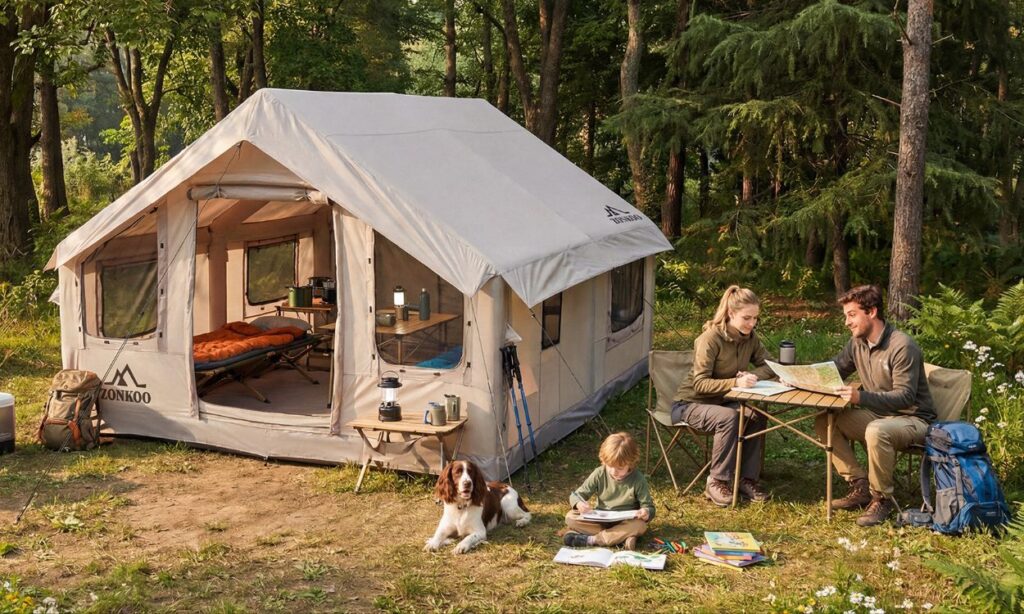
For families comparing small inflatable tents, the ZONKOO Lyra is one example built for a simpler setup. What matters in the specs for this tent is how much work it can remove from the first few minutes at camp. According to the ZOONKOO website, its main setup can be completed in 3 minutes, helping the shelter become usable sooner. For a one- or two-night family trip, that means parents can move on to settling the kids, preparing dinner, and organizing the sleeping area instead of spending the first part of the evening working on the tent.
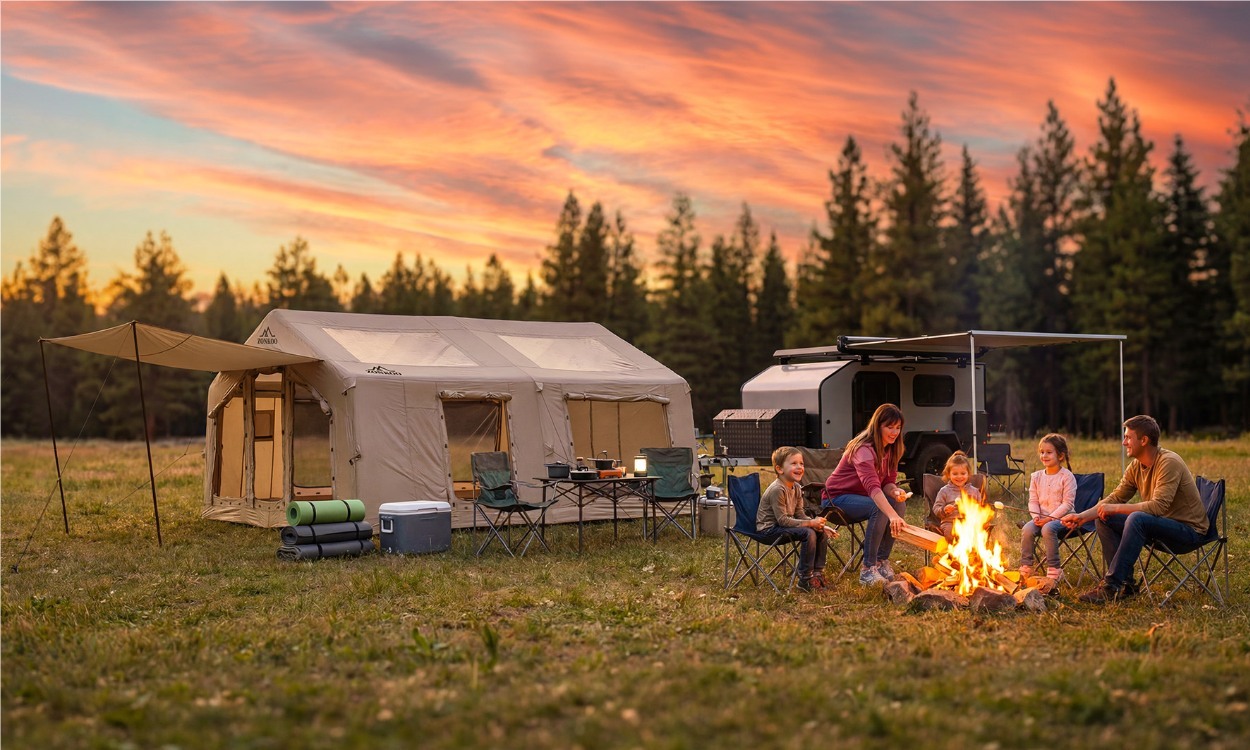
Once the tent is set up, the campsite can start working. Kids can help lay out sleeping bags, place shoes near the entrance, and organize their own water bottles and jackets. Parents can shift their attention from “we need to get the tent up” to “what do we do next together?”
Make Camp Cooking Simple
Family camp meals do not need to be complicated. The more complicated the menu, the more cookware, seasonings, cleanup, and storage it requires. Soon one person is working over the stove while everyone else is waiting.
A better plan is to prepare a few simple, reliable meals. Breakfast can be bread, eggs, fruit, oatmeal, or hot drinks. Lunch can be food and healthy snacks that do not require much cooking. Dinner can be the one hot meal that uses the stove. This still feels like camping without turning the whole evening into kitchen duty.
The stove should sit on a stable, ventilated surface away from the tent and away from the kids’ main activity area. Fire and fuel should stay under adult control. Food, dishes, trash bags, and cleaning supplies should be grouped clearly, and scented food or garbage should be stored according to campground rules. Even if bears are not a problem, chipmunks or squirrels can invade your space and spoil the whole weekend. It’s best to put food in airtight containers or back in the car for the night, and whenever you leave camp.
The goal of camp cooking is not to show off. It is to feed the family without making the campsite harder to manage.
Sleep Comfortably in Camp Without Making It Complicated
Kids may play hard all day and still struggle to sleep at night. A warm afternoon campsite can feel very different at 3 a.m. Sleeping bags and pads should be chosen for the actual nighttime low, not just the daytime forecast.
A sleep system does not need to be elaborate, but the basics matter. Each person needs a sleeping bag or blanket suited to the temperature, a pad that helps block cold and hard ground, and a warm layer within reach. The sleeping bag provides warmth. The pad helps with ground insulation and comfort. A cot might be more comfortable but dramatically reduces the insulation and will surround the sleeper with the lowest temperature. None of these should be treated as an afterthought.
Before bed, put headlamps, water bottles, jackets, tissues, and any kid essentials in the same place every night. If nobody has to dig through bags in the dark, everyone sleeps better.
Comfort in family camping is not about luxury. It is about reducing friction. The simpler the bedtime routine, the less likely the tent is to get turned upside down during the night.
If an inflatable camping tent is part of the simpler camp setup, it must answer more than the question of where everyone sleeps. It also has to make bedtime organization, nighttime access, and next-morning packing easier.
Choose Camping Gear Kids Can Help Set Up and Use
Family camping should not mean parents do everything while kids stand around waiting. When kids can help, they become more invested in the trip.
The jobs should be safe, clear, and easy to finish. Kids can carry light items, organize their clothing bags, lay out sleeping bags, place shoes near the entrance, check their water bottles and jackets, or put unused outer layers back where they belong.
Some jobs should not be left to kids alone. Stakes, guylines, stoves, fire, pump valves, and the final tent anchoring should be handled or checked by adults. Letting kids help does not mean handing over risk.
Gear that is easy to understand makes participation easier. A clear structure, simple storage, and obvious use areas help kids take part safely. They are not just waiting for camping to start; they are part of the setup from the beginning.
Letting kids help is not about giving them adult responsibility. It is about showing them that camping works best when everyone does a little.
Spend Less Time on Camp Chores
Camp chores look small, but they can eat an entire afternoon. Finding items, moving gear, wiping things down, sorting shoes, cleaning dishes, and picking up scattered clothing all take time.
The best way to reduce chores is to reduce repeated actions. Do not look for the same jacket three times in one day. Do not rebuild the cooking box after every meal. Put things back after using them. Let each person handle basic personal items. Do quick cleanup after meals, then take five minutes before bed to reset the entrance and sleeping area.
Rules should be simple enough for everyone to follow. Kids are more likely to put their gear back when the system is obvious.
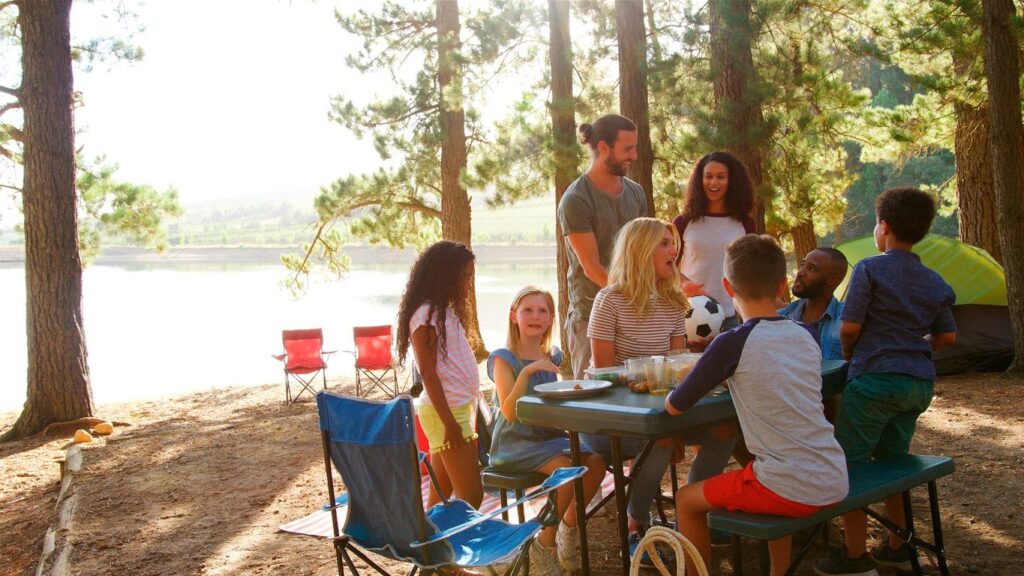
Less time spent on chores means more time walking, fishing, watching the fire, talking, or simply sitting still. The best memory from a family campout should not be how much time everyone spent cleaning up.
Judge Good Camping Gear by Durability, Not Features
Features matter, but for family camping, durability matters more than the number of extras. Gear has to survive repeated setup, dirt, kids going in and out, cleanup, packing, and unpacking.
Family camping gear gets used in real conditions. Shoes bring in sand and mud. Packs get dragged. The weather can change. Storage bags get squeezed into vehicles. That is a better test than any product photo.
Look for simple structure, parts that are not easy to lose, materials that clean without too much trouble, and storage that does not become a puzzle every time. If a piece of gear looks good once but becomes hard to repack or unreliable after a few trips, it is not reducing the family workload.
Durable gear makes the next trip easier. Parents do not have to relearn the setup or worry about fixing, adjusting, or replacing something every time.
The Goal of Camping: More Time Together Outdoors
The goal of family camping is simple: spend more time outside together and make the next trip easier to take. Gear is only a tool. It is not the campout itself.
Good gear does not need to make a campsite look more professional. It should reduce the time parents spend setting up, searching, cleaning, and reorganizing. When the shelter is stable sooner, meals are easier, sleep is better, kids can help, and chores are under control, the whole weekend feels smoother.
When gear stops taking over the afternoon, the family has more time to walk a little farther, sit a little longer, and watch the sky get dark together. That is the part of family camping worth remembering.