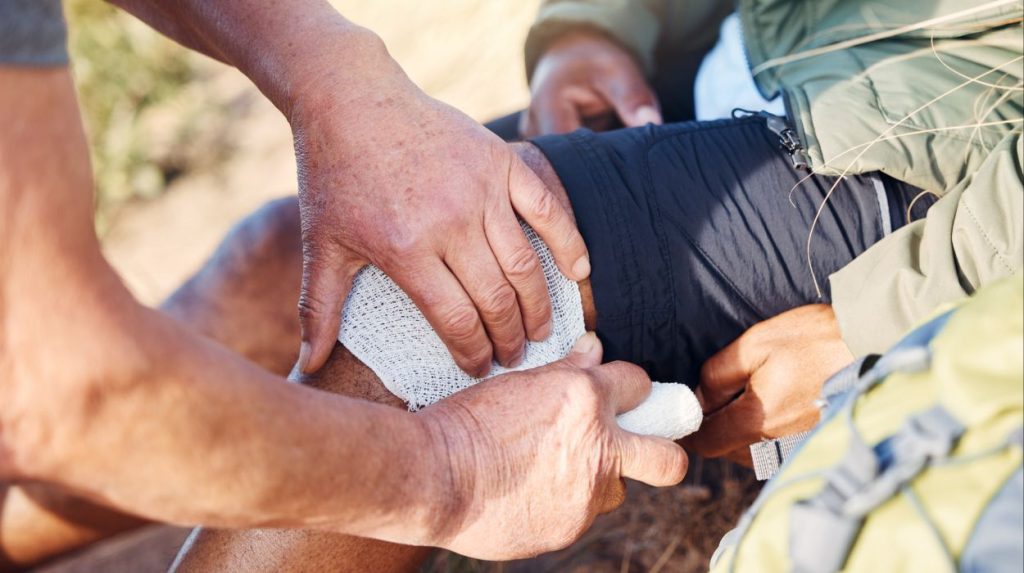
Everybody needs a first aid kit. But what exactly do you need in it?
By Leon Pantenburg
“First aid – caring for injured or ill persons until they can receive professional medical care—is an important skill for every Scout. With some knowledge of first aid, a Scout can provide immediate care and help to someone who is hurt or who becomes ill. First aid can help prevent infection and serious loss of blood. It could even save a limb or a life.” Boy Scouts Merit Badge Overview
I was in the Seattle airport, awaiting a connecting flight, when a man collapsed about 40 yards away. My Wilderness First Aid training kicked in and I headed in his direction. My mind immediately went to the first responder protocol and I knew what to do and the steps to take.
But before I could reach the fallen man, a nearby guard had already started CPR. I identified myself, as the protocol teaches, explained I had advanced First Aid training and offered my assistance. A nearby young woman had also seen the situation and responded. She was a doctor and took over. I didn’t need to do anything. I was thankful for the professionals who were on the spot to save this man. But, I was ready to help if I could.
Be Prepared for Any Emergency
Emergency situations can happen anywhere in a moment’s notice and you’ll have to rely on your training and gear to help someone else or yourself survive. The place to start your preparedness training is by taking a first aid class to learn some rudimentary skills. Then you should get the right first aid gear you can use.
I’ve taken the Wilderness First Aid course twice (once for the initial Scouting USA certification and once for the required refresher.) Each time, I’ve updated my own personal First Aid kits after the class was over. I love to accumulate first aid items, so we have large and small kits tucked all over the house, the cars, and the garage. We’ve had the neighborhood kids come to our house for wound dressing, or friends holler at us from their campsite, and our daughter recently called to grab our kit because her friend cut himself.
I’ll be taking another required WFA refresher course soon and was interested in checking out the SurviveX Large First Aid Kit. So, I reached out to the company for a sample kit.
What exactly do you need in your First Aid kit?
That depends on who you talk to and their skill level and training. I asked an experienced EMT that very question. He said the perfect first aid kit would be a fully-fueled and stocked ambulance with onsite personnel!
For the rest of us, though, we need a well stocked kit with items we’re familiar with and have the training to use. It can’t be too large and bulky, or it will be left at the trailhead or in the garage. An inadequate kit won’t have what you may need. A quality first aid class should help you decide on your personal kit.
Here are the specs of the SurviveX Large First Aid Kit:
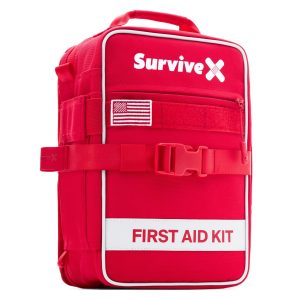
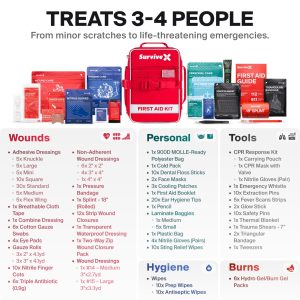
Includes: 250 First Aid components
Covers: 3-4 people
Weight : 2.78 pounds
Professional-Grade First Aid — Equipped components to handle real emergencies including wounds, burns, sprains, fractures and trauma.
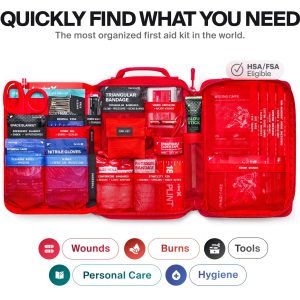
Eliminates Emergency Panic — Color-coded and labeled compartments grouped by use case (Wounds, Burns, Hygiene, Tools) for rapid, error-free identification.
Advanced Laceration Closures — Includes specialized zip stitch wound closures, offering a non-invasive field alternative to traditional stitches to close cuts in second.
️Designed in Virginia — Developed and designed by first aid professionals in Virginia for reliable emergency preparedness.
Organization System: Tri-fold with labeled compartments.
The SurviveX Large First Aid Kit includes 250 professional-grade components chosen by experts: Zip Stitch wound closures, trauma shears that cut through denim, hydrogel burn gel, a CPR mask with valve, a conforming splint, and more. Every item is labeled and color-coded so you find what you need in seconds — even when your hands are shaking.
Since I received the kit, I haven’t had a serious emergency, thank goodness. But the components I’ve examined are top quality and they appear to cover the gamut of first aid needs. I really like the color coded pouches and ease of identification.
My Personal Opinion of SurviveX First Aid Kit
Compact: the SurviveX Large First Aid Kit hits that sweet spot of not-too-big and not-too-small. It can go along on car camping or canoe trips without being in the way or too heavy to carry. (Hint: If you are going with a two-to-four person backpacking group, take turns carrying the first aid kit. Establish a rotation before taking off from the parking lot.) It’s an easy kit for the house, garage, utility room, or kitchen.
Eliminate first aid panic: Training reduces panic, but a real accident kicks the adrenaline in. Having color-coded equipment sections takes one more stresser out of the survival situation. Each pouch is labeled with that care treatment item.
Zip stitch wound closure strips are essential IMO. They are non-invasive, adhesive devices that draw the edges of minor lacerations together without needles or traditional stitches. They offer a pain-free, adjustable alternative to butterfly bandages and are ideal for remote emergencies or quick first-aid when getting to a doctor isn’t immediately possible.
Small ointment packs are my favorite in these kits. Includes cleaning wipes, burn gels, antibiotic packets. Extraction pins take out thorns, ticks, stickers, splinters.
I learned how to suture from a dentist friend of mine and I hope to never use that knowledge. But, I’m confident in the Zip Stitch solution for lacerations and wounds.
If you’re interested, you can order your Survive X First Aid Kit here
The Bottom Line on First Aid Skills
The headline of this story is that you need to take a first aid course sooner rather than later. From the skills learned, you’ll know how to use the items in a good kit, and figure out what you need to assemble for your home, your car, your adventures, and yourself.
After that, get those items together and be ready to assist anyone in need. Stay prepared and stay safe!
DISCLAIMER: SurviveX supplied the product for this review. I don’t work for the company, and no one had any input on this post. All we ever promise is a fair and unbiased review.
My Book: I’d really appreciate it if you would check out my book: “Bushcraft Basics: A Common Sense Wilderness Survival Handbook.” It is available on Amazon, at Barnes and Noble and your local independent bookstore